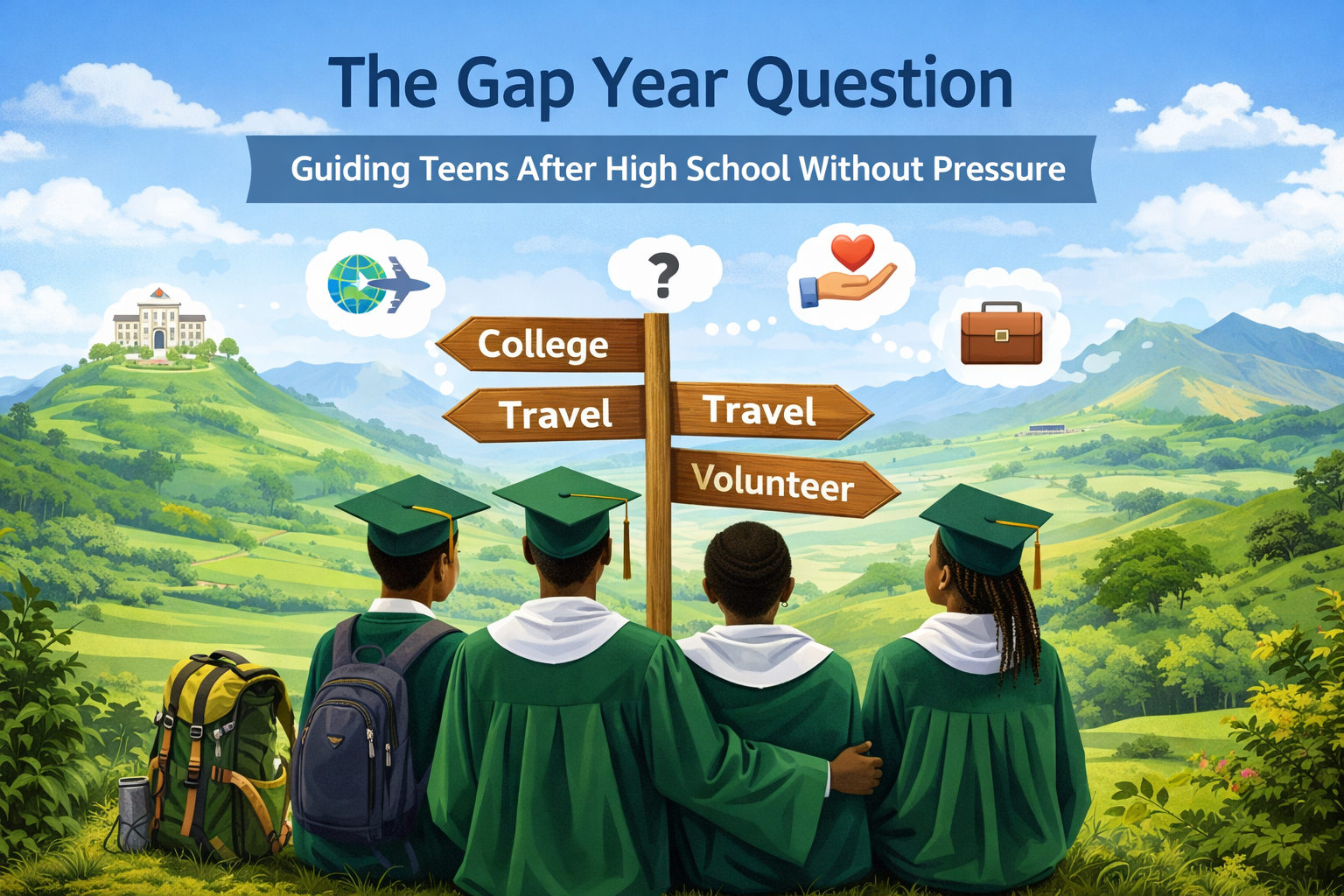
The final high school exam is done, the uniform is folded away, and suddenly the house feels different. For many parents and teens, this moment brings pride, relief, and an unexpected question that lingers in the air: what next? While some teens step confidently into university or work, others hesitate. And in that pause, the idea of a gap year often appears—along with worry, judgment, and pressure.
For teens, the transition out of high school can feel overwhelming. After years of structured schedules, constant evaluation, and expectations set by adults, they are suddenly asked to make life-shaping decisions. Some feel ready. Others feel tired, unsure, or disconnected from the paths placed in front of them. A gap year, when approached intentionally, is not about avoiding responsibility; it is often about finding clarity. It gives young people time to reflect on who they are becoming, explore interests beyond textbooks, and recover emotionally from the intensity of school life.
Parents, however, often experience this season differently. There is a deep desire to see their child “move forward,” not get left behind, or lose momentum. Questions arise about discipline, wasted time, or missed opportunities. These concerns are valid. Parenting is rooted in protection and preparation. Yet growth does not always follow a straight line, and readiness cannot be rushed without cost.
A well-guided gap year is not an absence of direction, but a shift in how direction is discovered. It can include volunteering, internships, short courses, entrepreneurship, creative projects, travel with purpose, or even rest paired with skill-building. What matters is structure, reflection, and accountability. When parents remain involved—asking thoughtful questions rather than issuing ultimatums—the gap year becomes a shared journey instead of a point of conflict.
This period can also strengthen parent-teen relationships. When pressure is replaced with curiosity, teens feel trusted rather than judged. Conversations move from “What should you do?” to “What are you learning about yourself?” Parents, in turn, get to witness their child develop independence, resilience, and self-awareness—qualities no degree alone can guarantee.
The gap year question is not really about time off. It is about timing, maturity, and purpose. For some teens, moving straight into the next academic step is right. For others, pausing to realign may prevent years of frustration, burnout, or costly course changes later. There is no single correct path—only the right one for that individual at that moment.
Guiding teens after high school without pressure requires patience, open dialogue, and trust. When parents create space for exploration while providing gentle structure, they help their teens step into adulthood with confidence rather than fear. Sometimes, the most powerful progress begins with a thoughtful pause.
The What Next Program
For high school leavers, figuring life out, transforming uncertainty into clarity, without the pressure. – To register CLICK HERE.
To learn more, visit our Budding Leaders Page or reach out to our team via uliza@mamamzazi.com